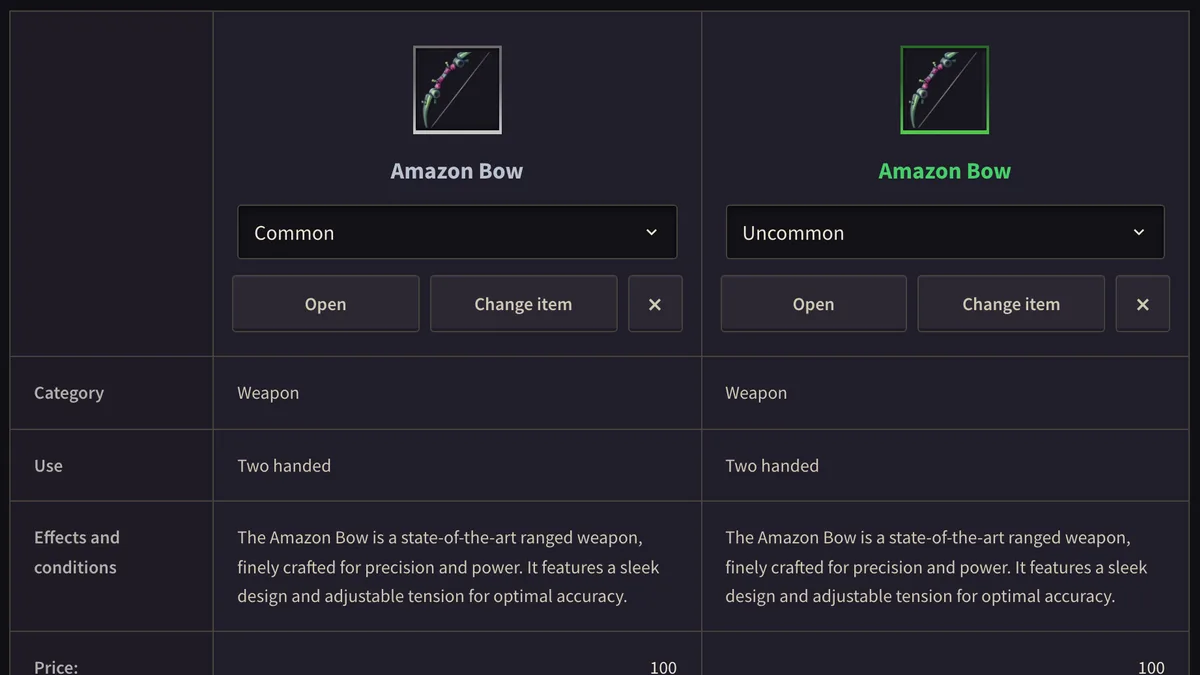
Choose an item and its quality before comparing how to obtain it. The comparison keeps up to three choices beside one another, with their use, binding, descriptions, base prices and acquisition links. Each choice represents an item at upgrade zero. It does not assume that a higher quality is always the better choice for your character.
What changes when I choose another quality?
A different quality can lead to a different crafting recipe even when the name, description and base price remain the same. Compare the actual rows rather than treating the frame colour as a damage score. A field marked unknown is not zero, and a missing description is not proof that an item has no effect.
The example below opens two qualities of the same bow. Its recipe materials and prices come from the same item and recipe pages you can open beside it. Compare the required materials before deciding which plan to pursue.
Common
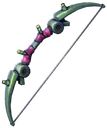 Amazon BowBase buy price: 100 gold

- 2 ×
 Iron Ingot (Common)
- 1 ×
 Strong Thread (Common)
- 1 ×
 Leather (Common)
- 1 ×
 Giant Feather (Uncommon)
- 1 ×
 Recipe: Amazon Bow (Common)
Uncommon
Amazon BowBase buy price: 100 gold
- 5 × Amazon Bow (Common)
How do I compare alternatives without starting over?
Use Change item under the choice you want to replace. The other columns stay in place, including their qualities. You can choose another quality of an item already on the board; only an identical item-and-quality pair is excluded. When all three columns are occupied, Change item still works even though Add item cannot add a fourth column.
Differences only hides rows whose displayed values match across the choices. Turn it off again when you need the full context. Identical unknowns may disappear too: a hidden row is not a claim that the underlying game values are equal or that either item is better.
Which recipe makes the selected item?
Crafted by opens recipes whose output matches that column's quality at upgrade zero. A recipe for an upgraded item is a different target and is not mixed into that list. Recipe items opens the related recipe books separately, so a book is not mistaken for the crafting operation itself.
Open a recipe to inspect its output quantity and direct ingredients. Open Crafting planner from the comparison when you need the full material chain: that link keeps the chosen item, quality and upgrade zero. The item encyclopedia link is broader; it opens the item page rather than a private comparison state.
Should I craft it or buy it?
Start with the material shortage for the quality you intend to make. Add your own acquisition quotes to that plan, then compare the priced shortage with the offer you can actually obtain. An incomplete quote total is not the cost of the whole craft.
The comparison's price and selling-price rows are base amounts before modifiers, not live player-market quotes. A zero is a known zero. Unknown means the comparison has no amount to use. Gold is displayed in gold units, not raw hundredths.
Possible offers links to merchants associated with the item. Stock and quantities may vary, and a minimum quality on a merchant row is not a promise that your exact selected quality is on sale. Open that merchant's offers before treating the row as a buying plan. Containers likewise describe an acquisition relationship; they do not promise a drop rate or a particular roll.
How do I keep or share the comparison?
Copy link keeps the ordered item choices, their qualities and Differences only. It leaves out the item-finder query and its result page. Opening that link restores those choices; Back and Forward let you revisit changes. Your own edited comparison is also kept in this browser. You do not need to export a file or sign in to compare items.
An unavailable choice stays visible so you can replace it, rather than silently becoming another item. A failed item load has Retry. Neither state should be read as an empty or free item.
Can the comparison choose my best build?
It does not calculate a universal damage score or recommend a best-in-slot item. Read the available effect and condition text in the context of your character, then follow a weapon's mastery link to inspect its talent tree. The comparison does not apply the item to a loadout, predict an unknown roll, or calculate upgrades beyond zero. Those are different questions from checking an item's stated properties and deciding how to obtain its chosen quality.